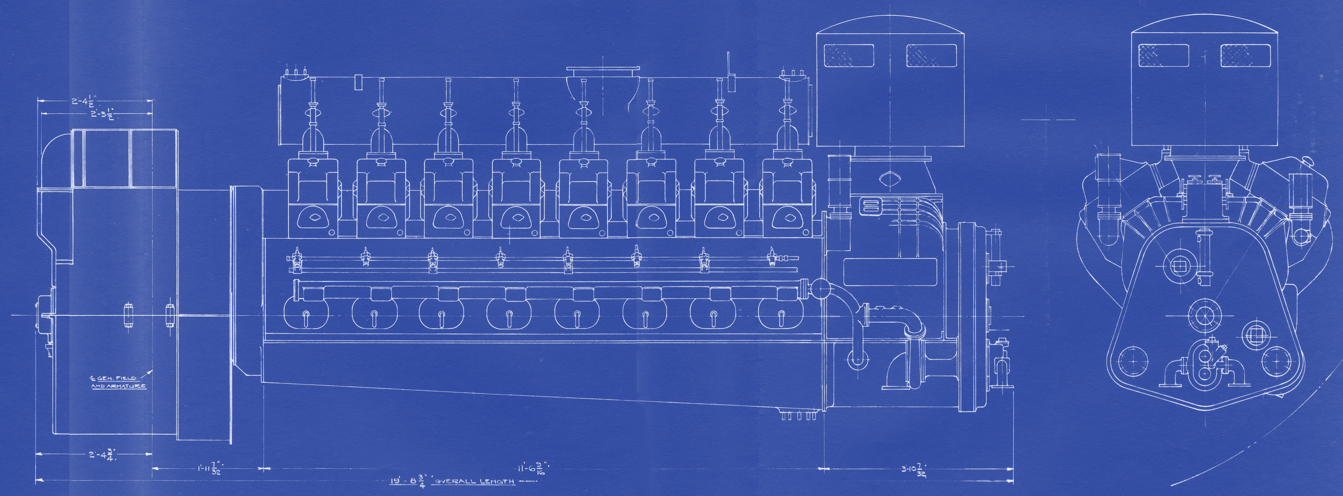
At the end of the war, the US was faced with a monumental task. What in the world do we do with the 1,000’s of ships, tanks, trucks and literally any and everything one could think of, that were now coming home? An old industry suddenly exploded – War Surplus. Each of the major divisions were faced with the daunting task of disposing of what was literally warehouse upon warehouse full of every last thing that was powering the war machine. And not just the large items, but all of the supplies to stock let’s say a new Liberty Ship – all of the galley equipment, light fixtures, anchors, lifeboat oars, life rafts, rope, cable, water tanks, rudders, shafts, steam machinery… the list is endless.
Keeping this maritime related, the US Maritime Commission published a monthly catalog called the Marine Surplus Seller. It is a treasure of maritime items that could be had for pennies on the dollar. While it did occasionally have a large item here and there, it mostly covered the stuff still stateside that never actually left the country or was utilized. The Maritime Commission literally wrote a book, “The use and disposition of ships and shipyards at the end of WWII” – which can be read on Google Books here


The Marine Surplus Seller was a monthly catalog issued by the War Assets Administration to sell..well, everything. On the cover is a Murray & Tregurtha Harbormaster drive. 180 of them were in stock at the Memphis warehouse, for $500.00 each. The Clark MD-6 was just one of many engines offered. Engines were usually available from cancelled contracts from vessels never built. Click for larger.
By the late 1940’s, the Maritime commission would focus on disposing of the full-size, self-propelled ships, leaving the “small stuff” to the new War Assets Administration, who took over the monthly seller. The majority of (but not all) the complete ships were mainly being sold to ship breakers for scrap. One of the biggest fleets that met the gas wrench: The Landing Ship Tank. There just was no need to keep over 1,000 of these ships in the fleet. Like the government itself, these salvage companies would pick these ships clean and sell everything they possibly could. Large advertisements were taken out in all the industry trade magazines of the era selling off the parts. Two of the big companies doing this task: on the East coast was the Boston Metals Company, in Baltimore, Maryland, and Zidell Explorations in Portland, Oregon on the West coast. In-between were numerous smaller companies that would get a bite of the action here and there.


Boston Metals, in Baltimore was a huge scraping outfit, that reduced many government vessels to piles of scrap, but along the way selling everything they could. In this case, an LST was being parted out. In some cases these advertisements would list engine serial numbers, in this case engines 1041 LST 551 and 1060, from LST-551. Zidell Explorations was the West coast equivalent of Boston Metals, who scrapped a large amount of fleet submarines, evident by the engines being sold here. Click for larger.
You guessed it – one of the prime items for resale were the EMD 567ATL engine sets. By March of 1950, 392 (196 LST’s worth) 12-567ATL engines were already in commercial operators’ hands. The Navy did not get rid of everything all at once though, as there were still numerous vessels kept in both the active and reserve fleets. After the end of the Korean war in 1953 the flood gates for surplus really opened up. By the mid 1950’s, over 850 567ATL’s were now in commercial hands. Cleveland stopped keeping good recorders of these around 1958 or so, so that number naturally went up higher. I have seen advertisements selling these engines (as well as 278A’s, 38 OP’s and many others) well into the 1980’s!


The timing could not have been any better. The maritime, and specifically tugboat fleets in the 1950’s were still operating vast fleets of worn-out steam and early direct reversing diesel tugs. While the hulls were still in decent shape, the engine plants were well past their prime. The 567ATL engine package (Engine, reduction gear, and in some cases propellers and controls were reused right out of the LST) were a perfect fit for the harbor tugs in the 70-90’ range, giving them a new 900HP drive. It was both an easy removal and installation as the engine and gear were on a common base. The bigger boats would usually get a 16-278A or Fairbanks OP.
The selling of these surplus engines had a two-fold effect.
First – It decimated the new engine market for a long time. The hardest hit was Cleveland Diesel naturally. Why would anybody spend a huge amount of money on a new engine, when they could get a surplus piece including the reduction gear with little to no engine hours for a fraction of the cost. Cleveland did embark on a program where they would buy back these surplus engines (mostly the 16-278As to fill that gap in the 90-110’ tugboat zone), rebuild them to as new condition and resell them under new order and serial numbers.
Second – It cemented EMD in the foothold of maritime propulsion. While the 567 was used in a handful of pre-war tugboats, it was not until the 567ATL came into play that they were really welcomed into the field. Not only was there a huge number of these engines, but now there were guys that also knew how to work on them. I have long since heard stories of “Well, such and such company bought an entire warehouse of these engines!” While I do not think it’s true, its likely not far off, as companies like McAllister and Great Lakes Towing converted numerous boats with these engines.
Lets explore a few boats that have been repowered with the 567ATL engine.
In 1934, Standard Oil Co. of New York (Socony) built a trio of small, self-propelled tankers, one of which was the Poughkeepsie Socony. This small ship was designed for use in the New York Barge Canal and coastal waters around the area. She was built by Bethlehem Steel in Staten Island and powered by a pair of Mcintosh & Seymour engines. The ship was not only the first all welded vessel built in the country, but also the largest all welded vessel at the time. In 1955, the ship was sent to Todd Shipyards Hoboken yard to be repowered, with a pair of 12-567ATL engines supplied by Socony-Mobil. The repowering was touted to have given the vessel a 10-year life increase. The following year she received a 29’4” mid body extension, bringing her up to 282’ long. Socony became Mobil, with the ship being renamed the Mobil New York in 1962. In 1971 it was sold to Poling Brothers in 1971, when it became the Captain Sam. Poling transformed into Poling & Cutler, with the ship getting her final name, Kristin Poling. Due to the Exxon Valdez accident and OPA 90 restrictions in which all single skin tankers had to be phased out of service by January 1st, 2015. The Kristin Poling was retired at the end of 2011 and sent to scrap, having lived a 77-year career, and getting an additional 46 years of life after her 10-year life expectancy overhaul in 1955.


The newly upgraded Poughkeepsie Socony was featured in the August 1960 issue of Diesel Times. Note that they mention the engines are 567C’s – having likely been upgraded to an AC engine spec’s before they were installed. Click for larger.

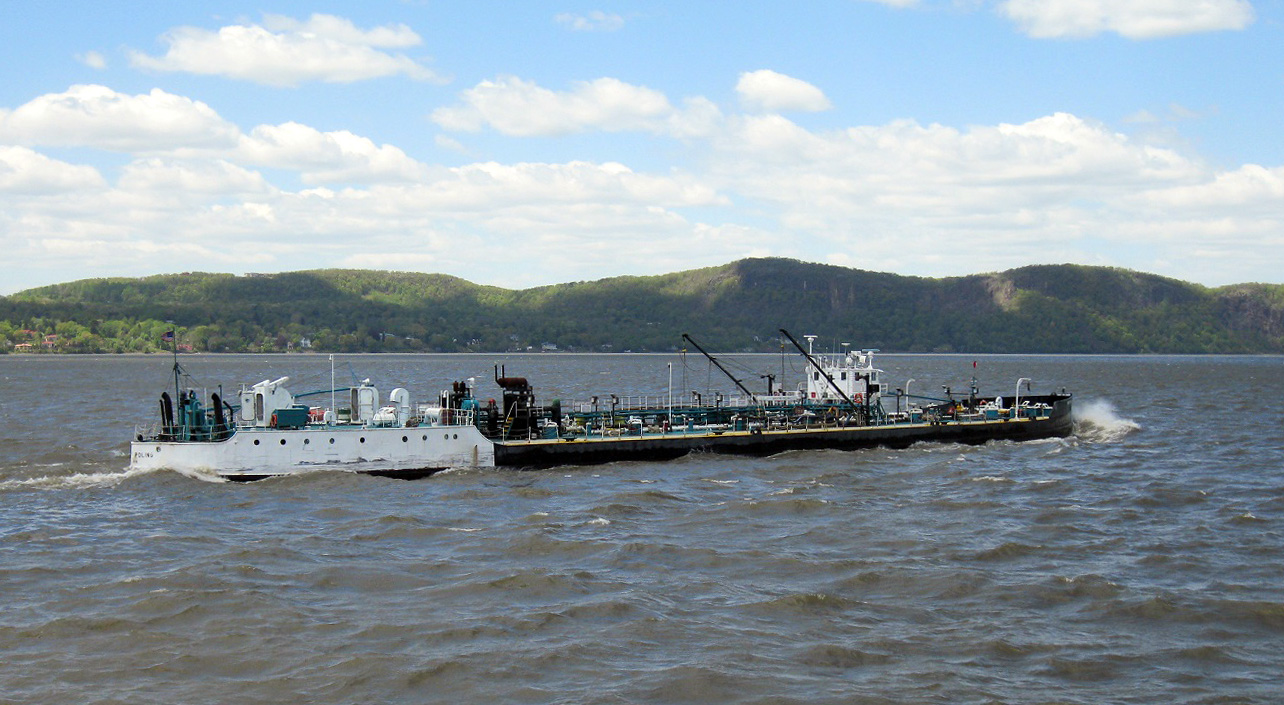
The Kristin Poling was a staple on the Hudson River during her last years in service, and a boat I got to photograph often. One of my most memorable (and long) nights on a tug was the night we broke her out of the ice at Crum Elbow, just north of Poughkeepsie. Will Van Dorp did a post on his Tugster website with my photos from that night here: https://tugster.wordpress.com/2011/01/22/poling/


Will was able to go aboard and document the Kristin Poling before being scrapped. You can view those posts linked below, along with another great post with some historical images. Will Van Dorp Photos, Click for larger
https://tugster.wordpress.com/2011/10/15/kristin-poling-1/
https://tugster.wordpress.com/2011/10/17/kristin-poling-2/
https://tugster.wordpress.com/2011/12/20/ice-and-fire/
https://tugster.wordpress.com/2022/02/18/canal-motor-ship-project-a/

The Poughkeepsie Socony received engines N-677 out of an unknown LST and engine N-1690 from LST-797. Sister vessel Plattsburg Socony also received 567ATL engines. Click for larger
https://www.tugboatinformation.com/tug.cfm?id=9430
Dalzell Towing of New York repowered their tug Dalzellido with a 12-567ATLS engine out of the LST-430. The Dalzellido (Dalzell named all of their tugs with DalzellXXX names) is a Type 327 ST – or Small Tug built as the ST-716 in 1944 for the US Army. These tugs were all originally powered with direct reversing engines of various makes. A large number of these tugs were built for the war effort, and naturally were sold off in the post war years. Most of the 327s that were sold off in the Northeast would receive the 12-567ATL engine replacing the original direct reversing engines, whereas the ones in the Great Lakes almost all kept their original engines.
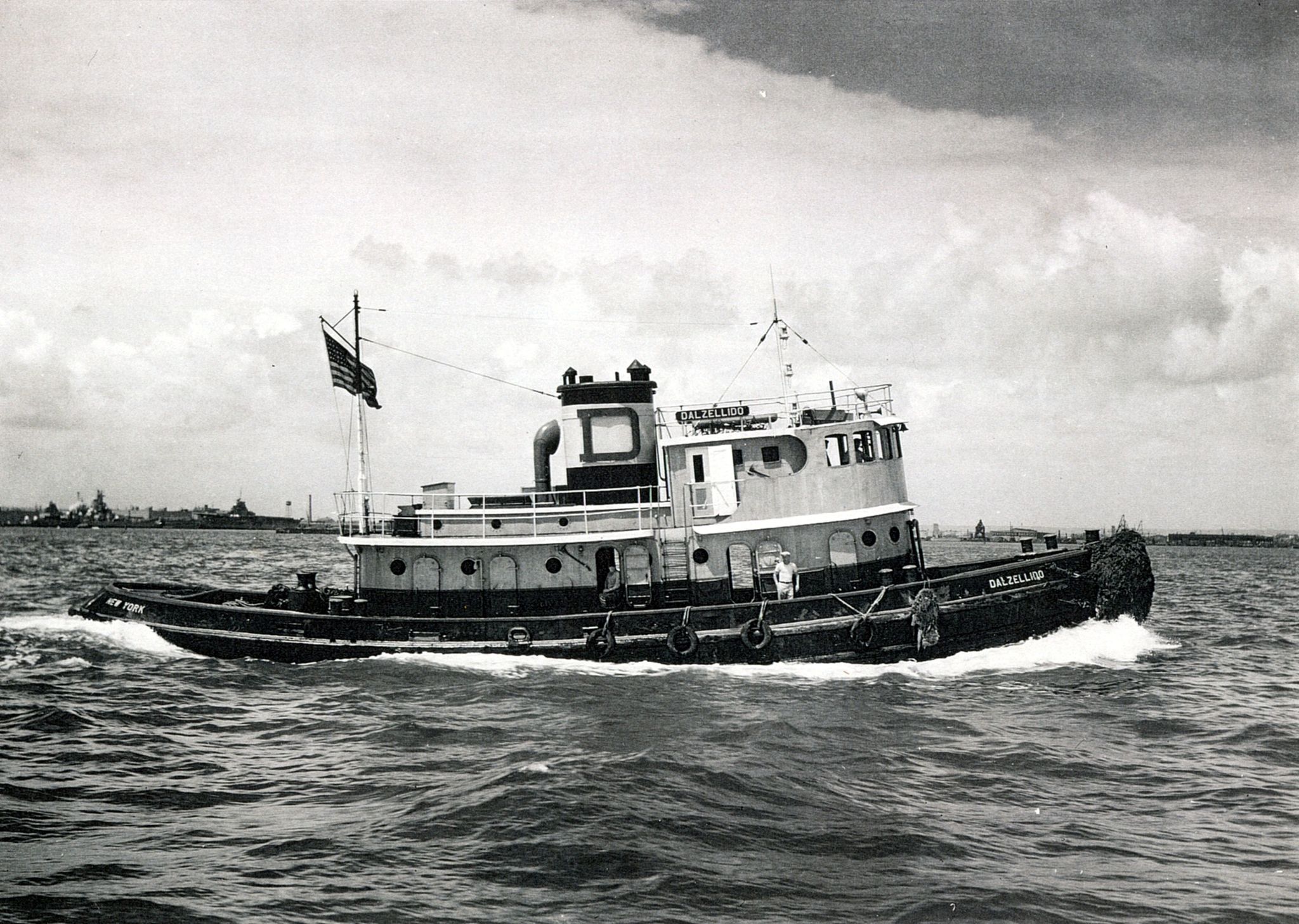
The Dalzellido, having shed her haze grey paint for the wonderful faux woodgrain of Dalzell Towing. Dave Boone Collection, Click for larger
The tug eventually wound up with Krause Towing of Baltimore after working for Taylor & Anderson on the Delaware River as their TandA 11. Krause renamed the tug as the Joann Krause and used the tug in the shipdocking trade. The tug was recently sold foreign where she will begin the next and likely final phase of her life moving various materials in South America.

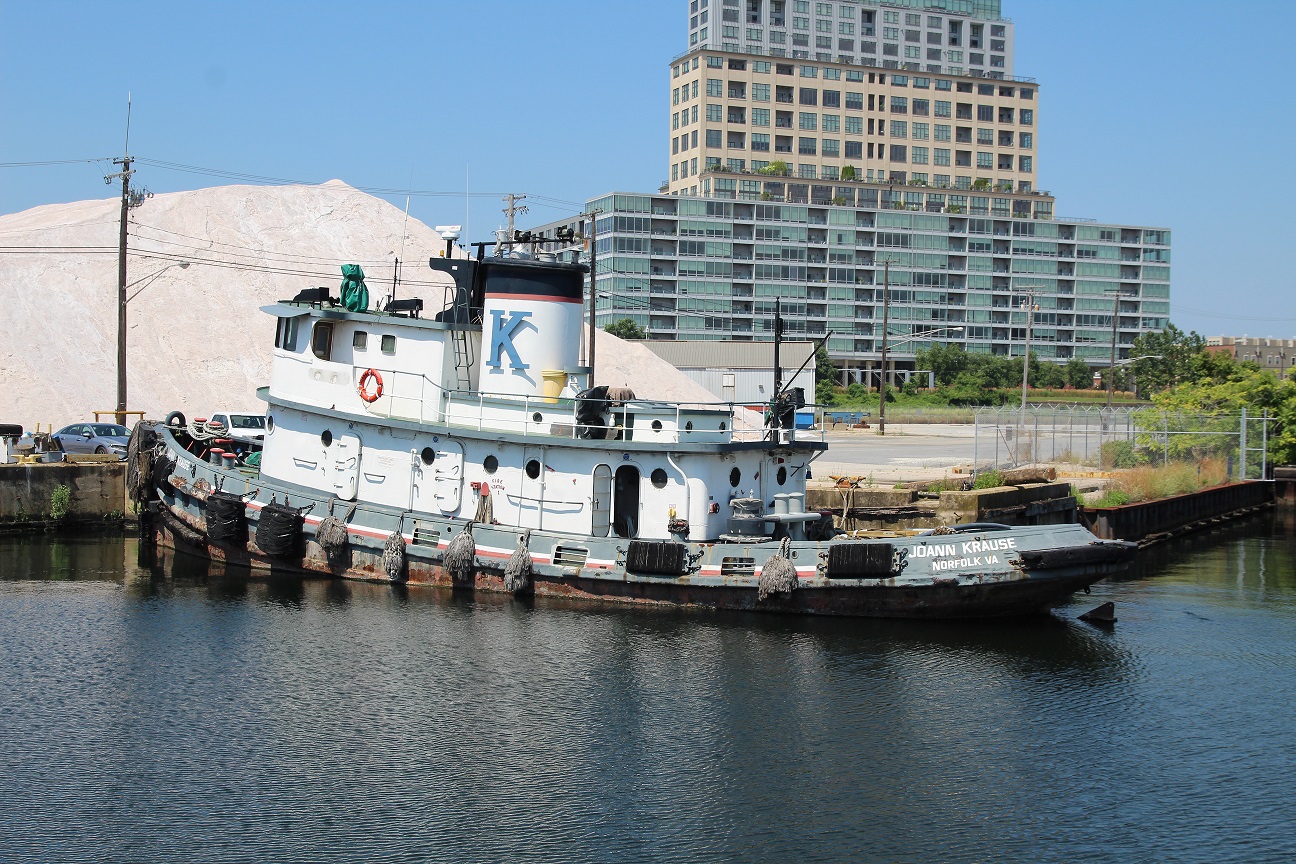


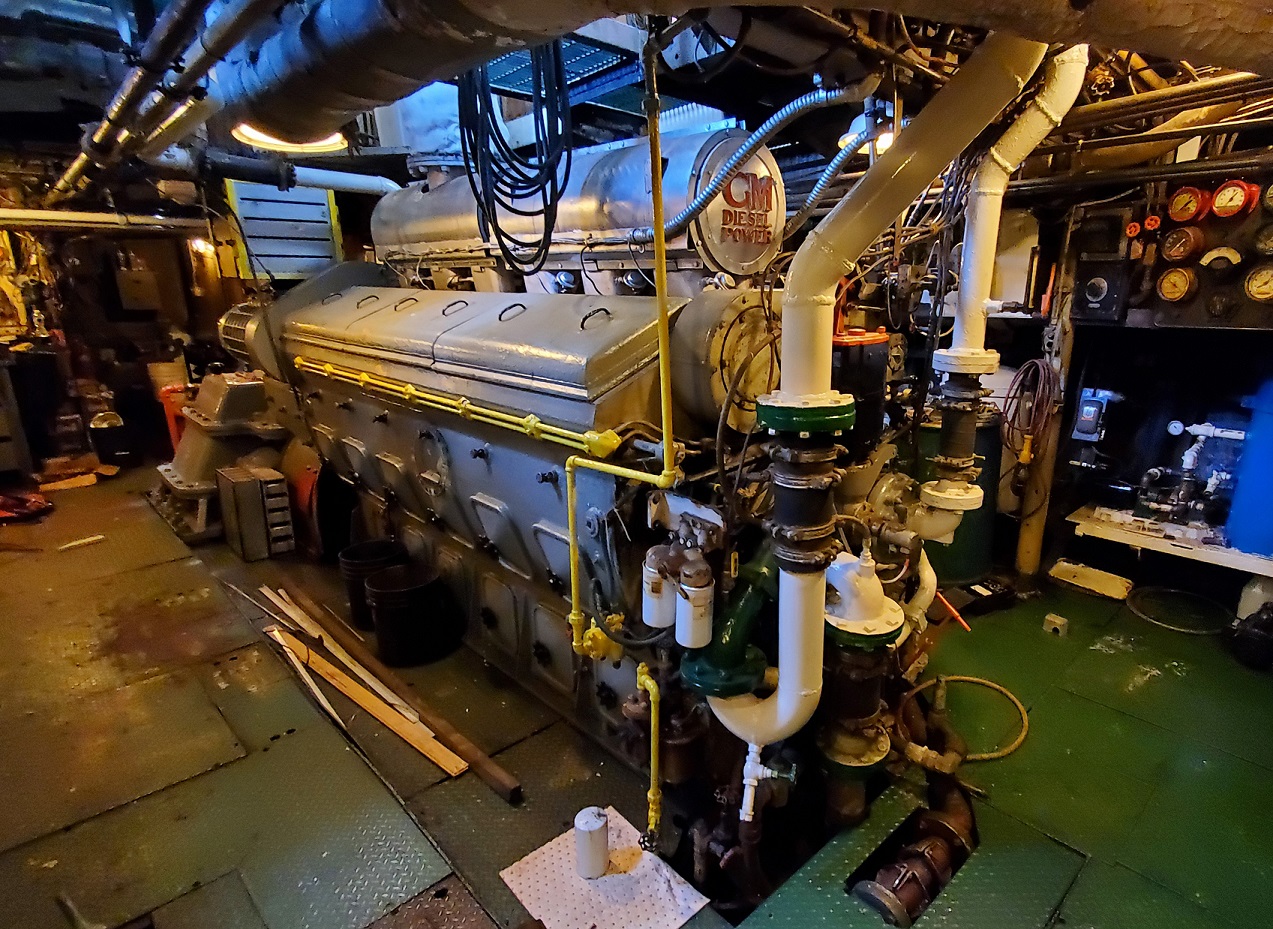
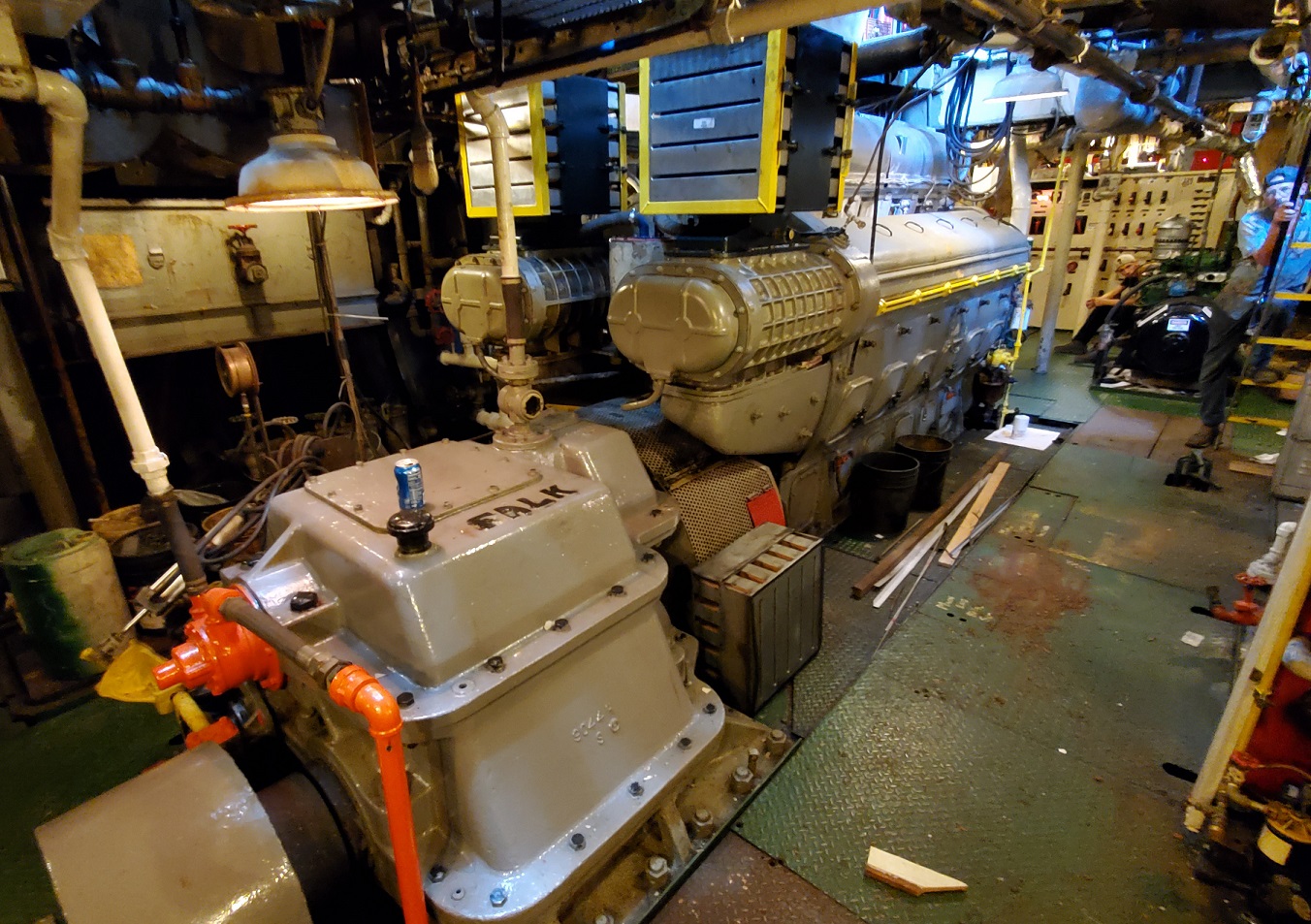

Click on each photo for larger versions. Wheelhouse interior photo by Franz A. von Riedel
https://www.tugboatinformation.com/tug.cfm?id=10083&fs
After the war, Lester F. Alexander Shipyard built a slew of budget, cookie-cutter 88′ tugboats, all powered with surplus 567ATL engines. One such tug was the Evening Star, one of three tugs built for Bouchard Transportation for use in the NY Barge canal.

Evening Star in New York Harbor in 1967. Dave Boone Collection, Click for larger
The Evening Star had a streak of bad luck, having gone through 3 engines in her lifetime, each time being replaced with another identical 567ATLS. The tug would wind up with Ferris Marine Contracting in Detroit, and finally Calumet River Fleeting in Chicago doing ship assist and barge work, named the Nicole S.


Unfortunately, her life would end here, as the last engine installed had a massive crankshaft failure in 2005 and was subsequently scrapped. Photos by Franz A. von Riedel, Click for larger
https://www.tugboatinformation.com/tug.cfm?id=2764
https://gltugs.wordpress.com/nicole-s/
McAllister Brothers Towing of New York was a company that repowered a slew of older tugs with the 567ATL engine. The Mary L. McAllister was one such tug, but she did not get the complete LST package. The Mary L. McAllister was built in 1939 as the Raymond Card – one of the very first tugs to get a brand new 12-567(U) engine, with diesel electric drive. The first generation 567 was replaced by McAllister in the 1950s’ with a “new” surplus 567ATL, N-735 from LST-41, keeping all of the original diesel-electric drive.
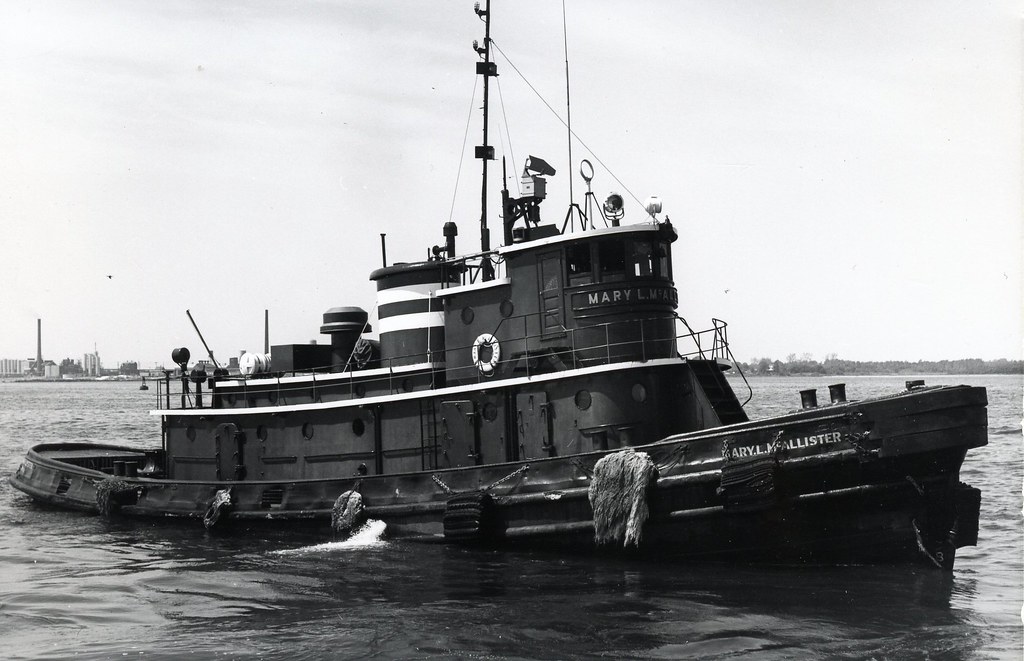
Mary L. McAllister in New York in the 1960’s. Dave Boone Collection, Click for larger
The tug was sold to the Great Lakes in 1981. The tug became part of the Zenith Tugboat Co. in Duluth, MN, having been renamed as the Seneca. The tug is currently a liveaboard in Sault. Ste. Marie. Several other early 12-567 powered boats had their engines replaced with these ATL engines. Be sure to check out our post on the Tug Pegasus, the former John E. McAllister, also repowered with a 12-567ATL.
https://vintagedieseldesign.com/2021/03/28/loss-of-a-museum-tug-pegasus/

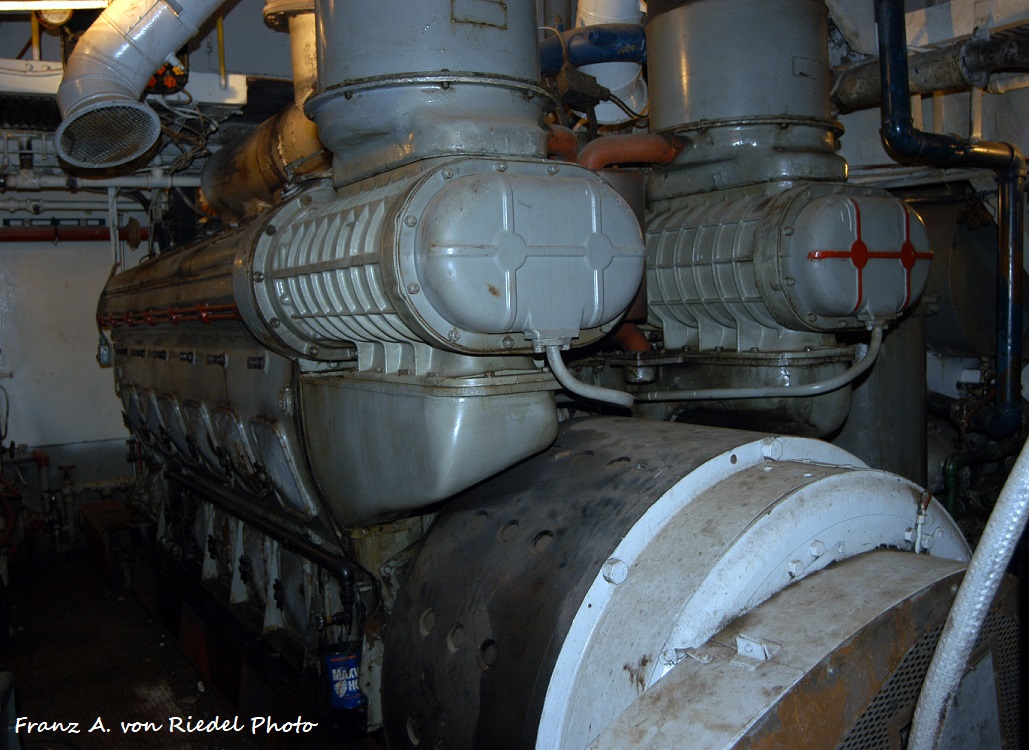

The Seneca spent her last commercial years in Duluth doing shipdocking and barge work for Zenith Tugboat Co. Photos by Franz A. von Riedel, Click for larger
https://www.tugboatinformation.com/tug.cfm?id=5104
https://gltugs.wordpress.com/seneca/
Philadelphia’s Meyle family owned the Independent Pier Company and Meyle Towing. Meyle had a modest fleet of numerous “hand me down” steam tugs. In the late 1950’s they embarked on a program to dieselize the fleet using WWII surplus engines, including a bunch of 12-567ATL and 16-278A engines. The 84’ long 1889 built tug Triton received 12-567ATLS engine N-1143 out of LST-988.

Triton taking a break in Philadelphia in the 1970’s. Meyle was bought by McAllister Towing in 1980. Dave Boone Collection, Click for larger
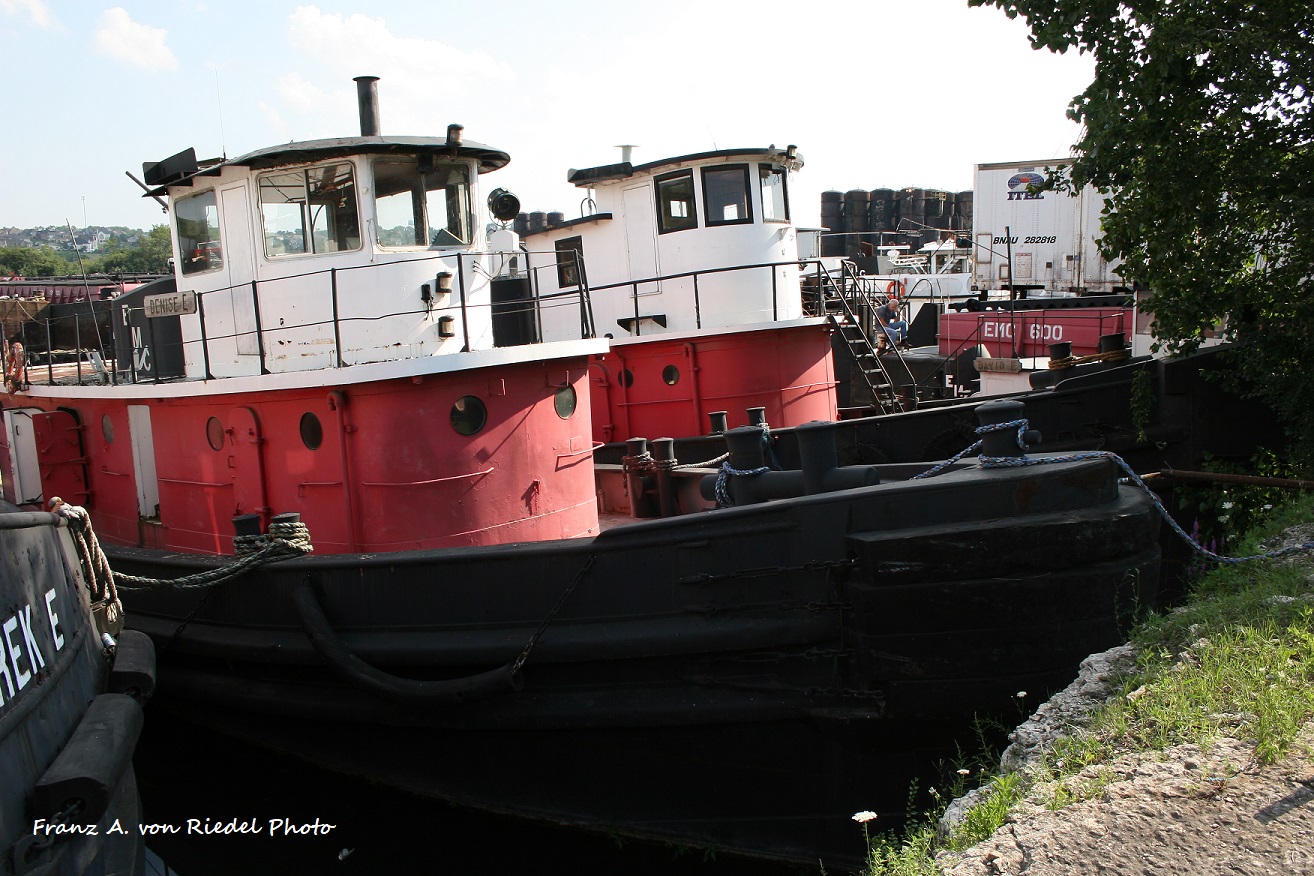


Triton was also sold up to the Great Lakes, ending up at Egan Marine of Lemont, IL and renamed the Denise E. Unfortunately her nice lines were “modernized” at some point in her later life. The tug was scrapped around 2013 after being for sale for a few years. Photos by Franz A. von Riedel, Click for larger
https://www.tugboatinformation.com/tug.cfm?id=5323
https://gltugs.wordpress.com/denise-e/
Great Lakes Towing is another company that converted a good chunk of their fleet using 12-567ATL engines. 15 of their steam tugs would get the LST engine repower package. Great Lakes Towing does ship docking service throughout the lakes, using some of the most well-known tugs, known as “G” tugs for the large G on the stack. We have discussed GLT in the past here, and one day will do a dedicated post on their unique tugs. The Oregon was a typical example of their 81’, Type II tug, powered with a 25” x 28” single cylinder steam engine, built at their own shipyard in 1921.


The tug received her 567ATL engine in 1952 from an unknown LST. Oregon was one of 4 tugs in the fleet to keep her original full-length deckhouse. GLT sold the tug in 1978, and ultimately ended up with Zenith Tugboat Company in Duluth, with the name Sioux. Franz A. von Riedel Collection, Click for larger


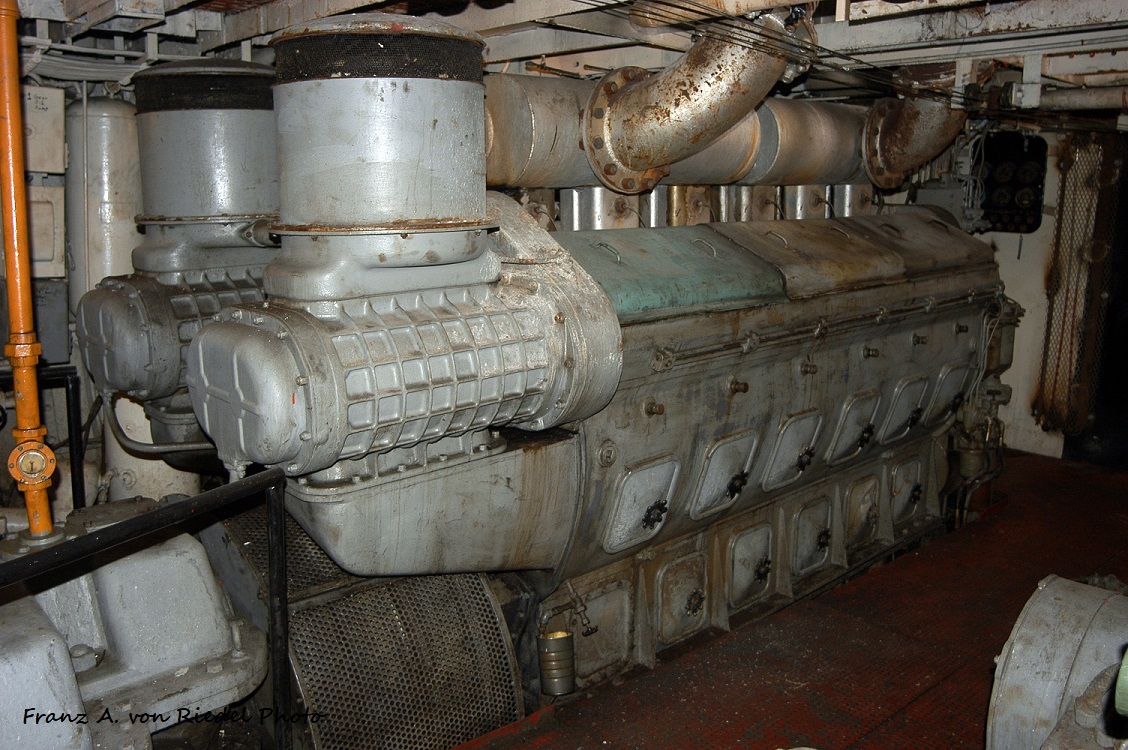

The 567ATL was the perfect combination for these 81’ “G” tugs. Notice how the engine is offset to the left side, a trademark of the Falk LST horizontal offset reverse reduction gear. Often times the tugs auxiliary generators would be placed opposite of this offset to help counteract the off-center main engine. Franz A. von Riedel Photos, Click for larger
https://www.tugboatinformation.com/tug.cfm?id=11628
https://gltugs.wordpress.com/sioux/

Roen Steamships huge 1919 built 150’ tug John Purves was another steam conversion. Roen Steamship purchased the former US Army tug in 1956 and had the Sturgeon Bay Shipbuilding & Drydock Company rebuild the tug, including installing a pair of 12-567ATL engines. The Purves received ATLS engine N-489 from LST-28 (the matching ATLP engine from LST-28 would go to the M/V South Wind, also operating in the Lakes). Unfortunately, I cannot find which ATLP engine the Purves received. The tug was donated in 2002 to the Door County Maritime Museum, and fully restored. Every time I have been there (3 times and counting ) the tug was not open for one reason or another, so take a look at this quick video.
https://www.youtube.com/watch?v=rkxhnmuK5Ro
https://gltugs.wordpress.com/john-purves/

Ferry Yankee is another former steamboat, this time a passenger excursion vessel. I’ll defect to Wikipedia for the long history of this boat! https://en.wikipedia.org/wiki/Yankee_(ferry)
At some point in her life, she would be repowered with a 567ATL from an unknown LST. Check out this video for a peek at her engine, as well as the rest of this gorgeous boat!
https://www.youtube.com/watch?v=u4I-tpKCQJE (Note the Cleveland 3-268A generator!)

Not all of the 12-567ATL engines would go into tugboats. Texas & Pacific (Missouri Pacific Lines) EMD NW2 switcher 1010 was one such example of a locomotive that received one. I was quite shocked when I opened the hood doors to see an “N” numbered engine! This engine began life as 12-567ATLS engine N-2051, installed in LST-1054. Texas & Pacific 1010 was built 9/1948 with engine 6024.

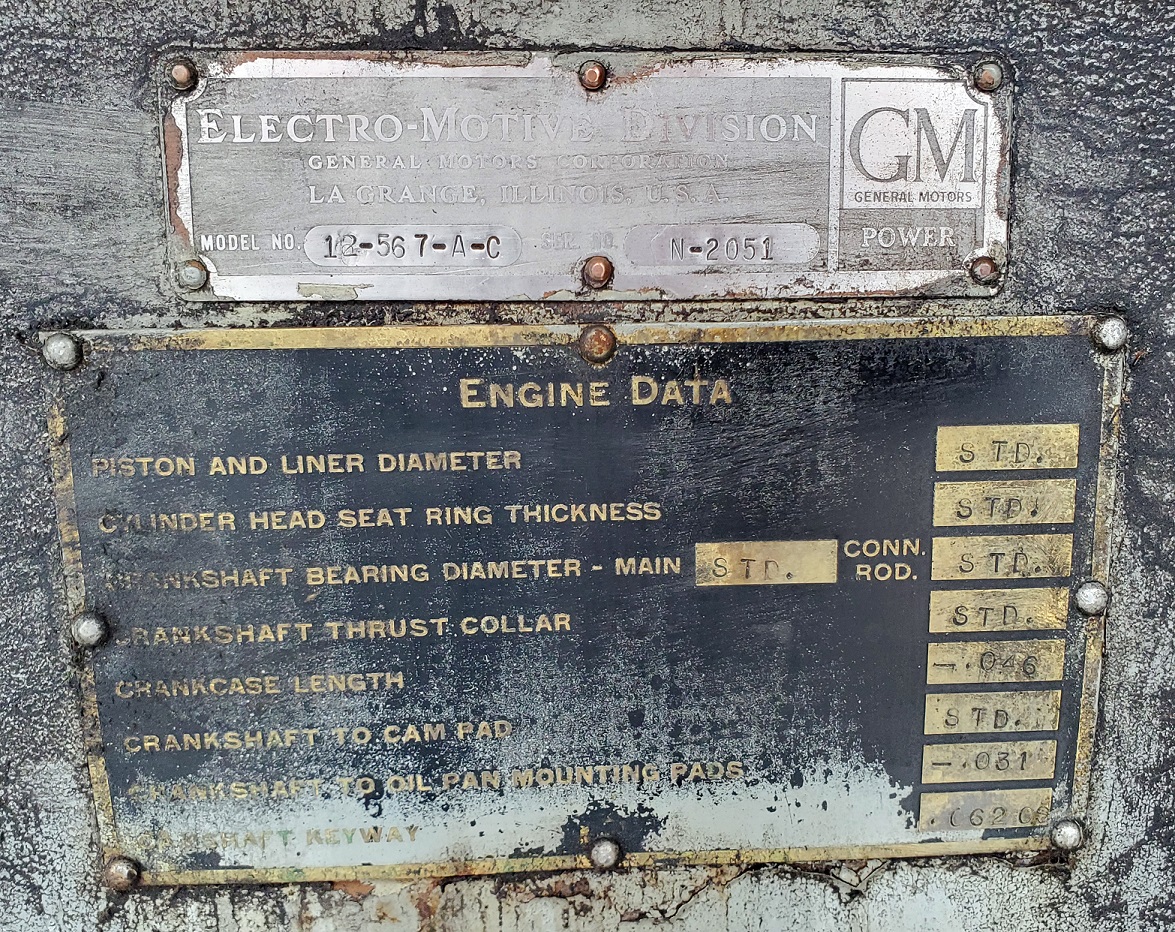

At some point in the locomotive’s life, the engine was replaced with this one, now upgraded as a 12-567AC. The 12-567AC is a conversion in which the block is modified to use the newer “C” style liners, eliminating the troublesome water deck. We will talk about this more in Part 3 of this series. The locomotive is currently part of a lease fleet in Michigan and is still a great little engine for its age!

The new “C” style liners, making this engine a 567AC.
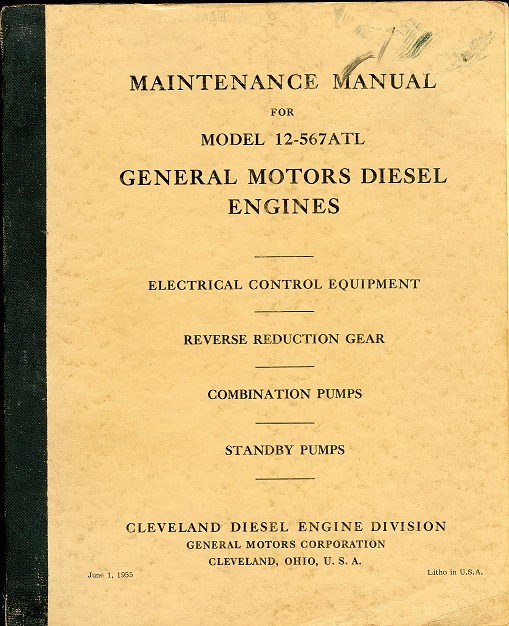
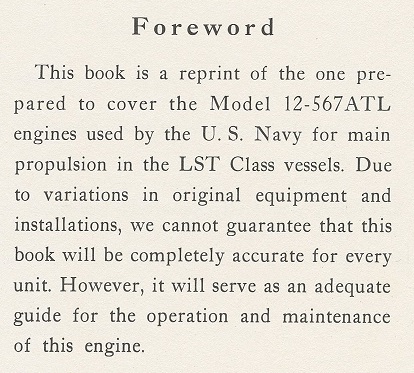
So many of these engines would be reused, that Cleveland Diesel would issue a new copy of the LST manual in 1955 aimed at all of the commercial users, which covered all of the major parts that were commonly reused, including the main engine, reduction gear and clutches, the electro-pneumatic control equipment (many users would shed this for just basic straight air controls down the road), and the auxiliary pumps.
This is just a quick glance of the almost 1000 engines (and that’s just the ones we know about!) that would be sold off and reused. Not only were these engines used in boats, but a whole bunch would be reused in municipal powerplants (I have found 3 of which STILL in use in the US!) from Alaska to Haiti, pumping stations, small ships, passenger boats and literally everything else you can think of. Pushing 80 years old, the era of these engines is however coming to a close, with the last few being part of museum ships, or the handful of stragglers left in commercial use.

A random sample page (of the 154 pages) of the 567ATL records, kept updated by Cleveland Diesel through the 1960’s with known dispositions. Note that this single page has tugboat and towboat repowers, dredge engines, still active LST’s, LST’s lost in WWII, stationary power plants and a refrigerator ship. Click for larger
Please be sure to stay tuned for Part III, which will be on the 567CA engine, EMD’s in kind replacement for the ATL engine. Thanks to Jay Boggess, Dave Boone and Franz A. von Riedel.
Be sure to check out the full series:
Part I – The EMD 567ATL: The power behind the Large, Slow Target (WWII LST)
Part III – The EMD 567ATL: The 567CA
Part IV – The EMD 567ATL: Part IV, LST Survivors
Part V – The EMD 567ATL: Part V, EMD File Photos


Another fascinating report. Thank you. I’ve spent a huge amount of time tracking the fates of the some 1050 LST’s from the wartime program. It would be overwhelming to also track the fates of twice that many engines! Thank you for sharing! -George Schneider, Solana Beach CA
LikeLike